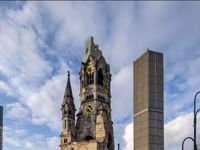
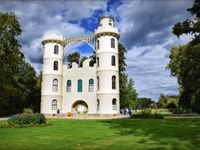
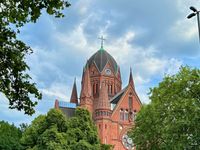
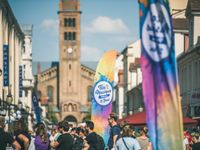
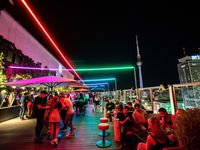
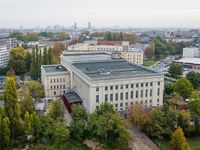
Berlin is the capital and, since 1999, also the seat of government of the Federal Republic of Germany. With more than 3.7 million inhabitants, the city is the most populous in Germany and Central Europe; at the same time, it is a federal state in its own right, enclosed by the state of Brandenburg.
Essential facts
- Population
- 3,782,202
- As of 2023-12-31
- Currency
- Euro (EUR)
- Spoken Languages
- German
- Area
- 891.7 km²
- Population density
- 4,242 / km²
Show all factsHide fact details
Administration
- Country
- Deutschland
- Head of Government
- Kai Wegner
- Legislative Body
- Abgeordnetenhaus von Berlin
- Administrative Districts
- 12
Geography & Practical Information
- Elevation
- 34 m
- Established
- 1244
- Postal code
- 10115–14199
- Calling code
- 49
- Vehicle registration
- B, I
- ISO code
- DE-BE
- Time Zone
- Europe/Berlin
- Official website
- www.berlin.de
Districts
An overview of the districts of Berlin – with local character, practical facts, and detailed travel guides.
Bezirk Mitte
Charlottenburg-Wilmersdorf
Friedrichshain-Kreuzberg
Lichtenberg
Marzahn-Hellersdorf
Neukölln
Pankow
Reinickendorf
Spandau
Steglitz-Zehlendorf
Tempelhof-Schöneberg
Treptow-Köpenick
Climate through the year
Monthly averages for 2016–2025
Sources: Open-Meteo using Copernicus Climate Change Service ERA5
Highlights
Discover the half-day walking tour of Berlin
BookableDiscover Berlin's past and present on this insightful 4-hour walking tour through Mitte, the city's historic center.
Berlin: Mitte Food Tour with 7 Authentic Local Tastings
BookableCome hungry for the ultimate Berlin food tour!
Sachsenhausen Concentration Camp Memorial (max. 15 guests)
BookableExplore the history of one of the most important forced-labor camps in Nazi Germany in an intimate group of no more than 15 people.
Berlin: Highlights der geführten Fahrrad- und E-Bike-Tour durch Berlin
BookableKurzfristig in Berlin?
Berlin: Ultimative Fahrrad- oder E-Bike-Tour mit Biergarten-Stopp
BookableDiese 5,5-stündige geführte Fahrradtour ist eine vollständige Einführung in Berlin, mit einer langen Mittagspause in einem lokalen Biergarten.
Berlin Landmarks of the Third Reich: Half-Day Tour
BookableGain insight into Berlin's Nazi past on this 4-hour walking tour of the notorious sites of the Third Reich.
Berlin Highlights Sightseeing Bike Tour 3.5h in Small Groups
BookableDiscover Berlin by bike on a 3.5-hour tour and get to know the city's highlights.
Full-day private walking tour through the entire history of Berlin
BookableDiscover 800 Years of Berlin's History with a Local Expert.
Destination guide
Orientation
Berlin is geographically and historically highly decentralized. Many of today's districts date back to the incorporation of surrounding municipalities in 1920; the later reform...
Orientation
Berlin is geographically and historically highly decentralized. Many of today's districts date back to the incorporation of surrounding municipalities in 1920; the later reform...
Berlin is geographically and historically highly decentralized. Many of today's districts date back to the incorporation of surrounding municipalities in 1920; the later reform of 2001 created the current twelve districts.
In everyday life, however, the old district names or localities are still often important, for example in station names, signposts, and Berliners' sense of identity.
For visitors, the central areas of Mitte, Tiergarten, Charlottenburg, and Westend are particularly important, as most of the sights and museums are located there. Prenzlauer Berg, Friedrichshain, and Kreuzberg are especially well known for their pubs, restaurants, and nightlife.
The historic center lies between Brandenburger Tor, Reichstag, and Alexanderplatz; Tiergarten and Charlottenburg follow to the west, Friedrichshain to the east, and Kreuzberg farther south.
- When planning cities, consider the districts as well, not just the borough names.
- Concentrate sights and museums primarily in Mitte and Tiergarten.
- Do not assume that district names always correspond to today's boundaries.
- Don't focus solely on the city center when looking for nightlife or trendy neighborhoods.
- Districts today
- 12
- Origin of Groß-Berlin
- 1920
- Especially relevant for visitors
- Mitte, Tiergarten, Charlottenburg, Westend
Arrival
Travel by air is via Berlin Brandenburg Airport (BER) in Schönefeld; Tegel is closed. The airport is connected by rail, S-Bahn and bus. Fare zone C is important, so trips into t...
Arrival
Travel by air is via Berlin Brandenburg Airport (BER) in Schönefeld; Tegel is closed. The airport is connected by rail, S-Bahn and bus. Fare zone C is important, so trips into t...
Travel by air is via Berlin Brandenburg Airport (BER) in Schönefeld; Tegel is closed. The airport is connected by rail, S-Bahn and bus. Fare zone C is important, so trips into the city center require a suitable ticket valid for zones BC or ABC.
By rail, Berlin Hauptbahnhof is the most important long-distance transport hub. ICE, IC/EC and regional trains, as well as S-Bahn, U-Bahn and trams, stop there. Other important stations include Berlin-Spandau, Berlin Gesundbrunnen, Ostbahnhof, Südkreuz and Berlin-Lichtenberg.
Long-distance buses usually terminate at the Zentraler Omnibusbahnhof (ZOB) by the Funkturm; there are additional stops at several railway stations and at BER. The city can also be reached by car, boat or bicycle.
For cars, take note of the Berliner Ring, the urban motorway and the low-emission zone within the S-Bahn ring. River cruise ships dock in Berlin-Spandau. Cycle paths lead from Brandenburg into Berlin, although the signage is patchy in places.
- For BER, factor in fare zone C.
- Use the main train station as the central transfer point when traveling by train.
- Remember the ZOB at Funkturm as the main destination for long-distance buses.
- Don't travel to the airport zone with the wrong VBB fare.
- Do not rely on finding a parking space easily in the city center by car.
- Major airport
- Berlin Brandenburg (BER)
- Important train station
- Berlin Central Station
- Intercity bus hub
- ZOB am Funkturm
- Environmental zone
- within the S-Bahn ring
Mobility
Berlin has a dense network of regional trains, S-Bahn trains, U-Bahn trains, trams, buses, and ferries within the Berlin-Brandenburg transport association. For many journeys, pu...
Mobility
Berlin has a dense network of regional trains, S-Bahn trains, U-Bahn trains, trams, buses, and ferries within the Berlin-Brandenburg transport association. For many journeys, pu...
Berlin has a dense network of regional trains, S-Bahn trains, U-Bahn trains, trams, buses, and ferries within the Berlin-Brandenburg transport association. For many journeys, public transport is clearly the less stressful option.
Regional trains are useful for fast connections within the city and to the surrounding area; the S-Bahn serves large parts of the city, while the U-Bahn mainly complements the network in the former western part. The east–west Stadtbahn is a central backbone of the network.
The Ringbahn encircles large parts of the city; lines S41 and S42 each run in only one direction. Bus routes 100, 200, and 300 are particularly interesting for visitors, as they connect many sights.
For multimodal mobility, BVG offers the Jelbi app, which can also be used to book vehicles and scooters from various providers. Traveling by car is rather impractical in Berlin because of heavy traffic, expensive and limited parking, and numerous residents-only parking zones.
Cycling is possible, but some routes have uncomfortable cobblestone surfaces and are not always well signposted. Ferries such as route F10 between Wannsee and Kladow are included in the VBB fare.
- For sightseeing, consider bus routes 100, 200, or 300.
- Use the Jelbi or BVG app for timetables and tickets.
- For longer journeys, use regional trains or the S-Bahn.
- Do not rely on the car as the most convenient solution for getting around the city center.
- Do not expect consistently good signage for cyclists.
- Networks
- Regional train, suburban train, subway, tram, bus, ferry
- Visitor lines
- 100, 200, 300
- Ringbahn
- S41 and S42 only run in one direction each
- Bicycle transport
- possible on S-Bahn, U-Bahn, trams, and ferries, but with an additional ticket
Places of interest
Places of interest
- Plan Museum Island and the Kulturforum as central museum hubs.
- For viewpoints, check early or pre-booked time slots, especially at the Fernsehturm and Reichstag.
- For the history of the 20th century, also include memorial sites related to the Berlin Wall and the Nazi era.
- Don't just check off individual landmarks; the routes between the main destinations can sometimes be long.
- Do not climb on the stelae at the Holocaust Memorial.
- UNESCO
- Museum Island, Housing Estates of Berlin Modernism, Palaces and Parks of Potsdam and Berlin
- Important Museum Highlights
- Museumsinsel, Kulturforum, Charlottenburg Palace
- Important panoramas
- Fernsehturm, Reichstag, Humboldt Forum, Siegessäule
Things to do
Berlin offers a packed program of festivals, sightseeing tours, guided tours, sports events, and bathing spots.
Things to do
Berlin offers a packed program of festivals, sightseeing tours, guided tours, sports events, and bathing spots.
- Book early during festival periods or expect heavy crowds.
- For nature and leisure, plan to visit Tempelhofer Feld or the large lakes.
- Check the offerings from Berliner Unterwelten for bunker and history tours.
- Do not assume that all major events are accessible spontaneously.
- Allow plenty of extra time at the Brandenburg Gate and other event venues during major events.
- Significant festivals
- Berlinale, Carnival of Cultures, Fête de la Musique, CSD, Festival of Lights
- Important sports venues
- Olympiastadion, Alte Försterei, Uber Arena, Max-Schmeling-Halle
- Important seaside resorts
- Wannsee, Plötzensee, Tegeler See, Müggelsee
Dining and Drinking
Berlin has a diverse culinary scene, with a wide range of prices. The density of restaurants is particularly high in touristy and central districts, as well as in trendy neighbo...
Dining and Drinking
Berlin has a diverse culinary scene, with a wide range of prices. The density of restaurants is particularly high in touristy and central districts, as well as in trendy neighbo...
Berlin has a diverse culinary scene, with a wide range of prices. The density of restaurants is particularly high in touristy and central districts, as well as in trendy neighborhoods.
The city caters equally well to those looking for simple snacks, international cuisine, or fine dining; at the same time, it offers numerous unusual restaurant concepts, ranging from dark restaurants to private supper clubs.
Typical Berlin or Berlin-influenced terms and dishes include Boulette, Grilletta, Ketwurst, Berliner Weiße, Berliner Luft, and Hoppelpoppel. Currywurst also originated in Berlin; Konnopke and Curry 36 are among the best-known establishments.
Döner kebab is now firmly part of the cityscape, particularly in districts such as Kreuzberg, Neukölln, Moabit, and Wedding. These districts, as well as Lichtenberg and Friedrichshain, are also home to many Turkish, Arab, and Russian specialty shops.
Berlin's brewing history plays an important role in its beverage culture, even though many former brewery sites have closed. Today, there is a wide selection of beer gardens, pubs, and restaurants spread throughout the city.
- For Berlin classics, also plan to include simple snack bars and market halls.
- Search for specialty shops in Kreuzberg, Neukölln, Moabit, and Wedding.
- For fine dining, consider the central location and trendy neighborhoods.
- Do not limit the search for international cuisine to tourist hotspots.
- Expect wait times at popular specialty food stalls.
- Typical dishes
- Currywurst, Boulette, Grilletta, Ketwurst, Hoppelpoppel
- Typical beverages
- Berliner Weiße, Molle, soft drink, barrel soft drink
- Famous currywurst spots
- Konnopke, Curry 36
Shopping
Berlin has a very decentralized retail landscape, with many local shopping streets, large department stores, and numerous shopping centers. Important shopping streets include Ku...
Shopping
Berlin has a very decentralized retail landscape, with many local shopping streets, large department stores, and numerous shopping centers. Important shopping streets include Ku...
Berlin has a very decentralized retail landscape, with many local shopping streets, large department stores, and numerous shopping centers. Important shopping streets include Kurfürstendamm and Tauentzienstraße, Friedrichstraße, Wilmersdorfer Straße, Schönhauser Allee, and Schloßstraße.
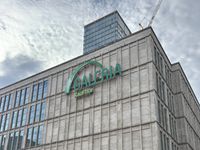
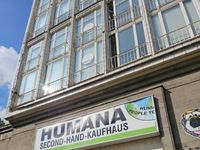
In principle, shops can remain open around the clock from Monday to Saturday; supermarkets are often open until 10 p.m. or midnight. Well-known department stores include KaDeWe in Schöneberg, Galeria Kaufhof at Alexanderplatz, and Humana Secondhand & Vintage in Friedrichshain.
- For longer shopping trips, combine central districts and large shopping centers.
- For late opening hours, use the large department stores and supermarkets.
- During Advent, plan Christmas markets as an additional shopping destination.
- Don't expect every shopping street to work the same way; Berlin is strongly shaped by its individual districts.
- Don't focus solely on the city center when looking for specialized product ranges or outlets.
- Important shopping streets
- Kurfürstendamm/Tauentzienstraße, Friedrichstraße, Wilmersdorfer Straße, Schönhauser Allee, Schloßstraße
- Famous department stores
- KaDeWe, Galeria Kaufhof Alexanderplatz, Humana
- Large shopping centers
- Alexa, Das Schloss, Potsdamer Platz Arkaden, Gropius Passagen
Practical tips
Berlin is expansive, but easy to navigate in everyday life using public transportation. The network is extensive, and signs and bilingual notices are available in many areas. Th...
Practical tips
Berlin is expansive, but easy to navigate in everyday life using public transportation. The network is extensive, and signs and bilingual notices are available in many areas. Th...
Berlin is expansive, but easy to navigate in everyday life using public transportation. The network is extensive, and signs and bilingual notices are available in many areas. The BVG app and the Jelbi app are helpful for timetables, tickets, and multimodal mobility.
Drinking water fountains are available throughout the city. In everyday life, the city uses a Berlin dialect with several distinctive terms, such as Schrippe, Pfannkuchen, Molle, and Boulette. Special ways of telling the time, such as "viertelvier" or "dreiviertelvier," may also be heard.
Northern German terms such as Sonnabend are common. English is also spoken in many areas; Turkish is particularly widespread in Kreuzberg. Berliners tend to be pragmatic when walking and using escalators: stand on the right and leave the left side clear.
In most tourist areas, passersby are happy to help with questions. The city tax is charged to private travelers on the accommodation price and paid on site.
- Use BVG or Jelbi for schedules and tickets.
- Stand on the right and let people pass on the left on escalators.
- Account for Berlin time and language conventions.
- Don't be surprised if routes take longer than expected.
- Do not assume that city centers and districts are always compact or walkable.
- City Tax
- 7.5% of the accommodation price
- Helpful Apps
- BVG app, Jelbi app
- Languages
- German, English, and partly Turkish
Security and Safety
Berlin is generally considered a safe and tolerant city. As in other major cities, however, pickpocketing, bicycle theft, fraud by deception and occasional drug-related crime do...
Security and Safety
Berlin is generally considered a safe and tolerant city. As in other major cities, however, pickpocketing, bicycle theft, fraud by deception and occasional drug-related crime do...
Berlin is generally considered a safe and tolerant city. As in other major cities, however, pickpocketing, bicycle theft, fraud by deception and occasional drug-related crime do occur.
Particularly in tourist areas and in crowded public transport, valuables should be kept in sight; bags should not be left unsecured on the back of a chair, and wallets and mobile phones should not be left openly on the table.
Some areas are considered crime hotspots, including Alexanderplatz, Warschauer Brücke, a small section of Rigaer Straße, Görlitzer Park, Kottbusser Tor, and parts of Hermannstraße and Hermannplatz.
Riots can occur around May 1 in parts of Kreuzberg, Friedrichshain and Prenzlauer Berg, although they have been less dramatic in recent years. The emergency number for reporting lost cards is 116 116.
- Keep valuables especially secure in crowds.
- Stay alert in known problem areas.
- Plan for additional caution during large nighttime events.
- Do not leave bags and smartphones lying around openly.
- Avoid getting caught between larger conflicts.
- Map emergency call
- 116 116
- Typical offenses
- Pickpocketing, bicycle theft, confidence trickery
- Specified focus areas
- Alexanderplatz, Warschauer Brücke, Görlitzer Park, Kottbusser Tor
City connections and accessibility
Berlin is very well connected, yet large enough that the choice of neighborhood remains important for accommodation and getting around. The central station, BER Airport, the ZOB...
City connections and accessibility
Berlin is very well connected, yet large enough that the choice of neighborhood remains important for accommodation and getting around. The central station, BER Airport, the ZOB...
Berlin is very well connected, yet large enough that the choice of neighborhood remains important for accommodation and getting around. The central station, BER Airport, the ZOB central bus station, and several major railway stations are the main points of entry.
Within the city, regional trains and the S-Bahn are often the fastest means of covering longer distances, while the U-Bahn, trams, and buses provide local connections.
For visitors focused on sightseeing, it is worth noting that the four-track Stadtbahn connects many central destinations and that bus routes 100, 200, and 300 serve as convenient panoramic routes.
When choosing accommodation and planning excursions, it is worth considering the location in relation to the S-Bahn Ring, the city center, and connections to regional transport. For those arriving by car, the environmental zone, parking costs, and traffic density are the main constraints.
- Choose accommodation based on rail connections, not just price.
- Use the light rail and visitor buses when visiting the city center.
- If avoidable, don't plan to drive into the city center.
- Don't underestimate how far apart the city districts are.
- Most Important Entry Points
- BER, Hauptbahnhof, ZOB, Spandau, Gesundbrunnen, Ostbahnhof, Südkreuz
- Visitor axis
- Stadtbahn Ost-West
- Sightseeing buses
- 100, 200, 300
More about Berlin
Loading Wikipedia chapters…