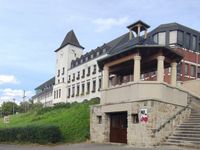
Altes Rathaus
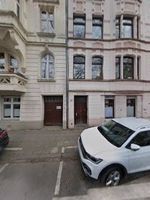
4.3 (3)Bezirksrathaus Porz, Friedrich-Ebert-Ufer 64-70, 51143 Köln-Porz, Germany
City Hall
Restroom
Wheelchair accessible entrance

Cologne is a German city of over a million inhabitants located on the Rhine in North Rhine-Westphalia. The city is considered vibrant, shaped by carnival, and comparatively tolerant; many visitors associate it with Kölsch beer, breweries, and a distinctive pub culture.
An overview of the districts of Cologne – with local character, practical facts, and detailed travel guides.
Monthly averages for 2016–2025
Sources: Open-Meteo using Copernicus Climate Change Service ERA5
Excellent: Best of the Best 2021 TripAdvisor DISCOVER UNKNOWN DETAILS OF COLOGNE + Surprise Gift!
Combine a classic sightseeing tour with a relaxing bike ride through Cologne.
The tour language must be selected separately; it does not correspond to the language of the homepage!!
During the tour, you'll gain an in-depth insight into street art.
Enjoy the all-inclusive experience on your entertaining brewery tour, with 3 Kölsch beers included and pure Rhenish joie de vivre!
Skip the standard sightseeing tour and discover Cologne through the eyes of a local.
This isn't just a food tour—it's a journey through the soul of Cologne, led by a true local.
UNIQUE NIGHT TOUR IN COLOGNE: THE PERFECT MIX OF ENTERTAINMENT & KNOWLEDGE Your special weekend night experience!
Cologne is divided into 9 city districts and 86 neighborhoods; in everyday life, however, people generally think in terms of "Veedels." For visitors, the most relevant areas are...
Cologne is divided into 9 city districts and 86 neighborhoods; in everyday life, however, people generally think in terms of "Veedels." For visitors, the most relevant areas are the city center, Altstadt-Nord and Altstadt-Süd, Deutz, Neustadt, the Belgian Quarter, Ehrenfeld, Nippes, Lindenthal, and Südstadt.
The Old Town around Martinsviertel, Alter Markt, and Heumarkt is strongly shaped by history and very busy with tourists during the day. To the west are the city center and Friesenviertel, with shopping streets and nightlife.
Deutz, on the right bank of the Rhine, is primarily home to Rheinpark, Lanxess-Arena, and the trade fair grounds.
Lindenthal and the parks on the outskirts are important for green spaces and more family-friendly areas, while Ehrenfeld, Nippes, and Südstadt are considered nightlife and residential neighborhoods, each with its own distinct character.
Cologne/Bonn Airport is connected to the city center by bus, train, S-Bahn, and regional and ICE services; from Terminal 2, it takes around 10 minutes by train to the main stati...
Cologne/Bonn Airport is connected to the city center by bus, train, S-Bahn, and regional and ICE services; from Terminal 2, it takes around 10 minutes by train to the main station. The airport railway station is also connected to the long-distance rail network. Cologne has excellent rail connections.
Important stations include the main station directly next to the cathedral and Köln Messe/Deutz on the right bank of the Rhine. IC and ICE trains connect Cologne with many major cities; there are also international connections to destinations such as Paris, Brussels, Amsterdam, and Zurich.
Long-distance buses stop at Cologne/Bonn Airport and in Leverkusen-Mitte. By car, motorways form a ring around the city; however, routes into the city center and the Rhine bridges are particularly congested during rush hour.
Parking in the city center is limited and expensive, so parking outside the center and continuing by train or bus is usually the more practical option. The city center is also an environmental zone.
Cologne's Stadtbahn is a combined underground and tram system. Important interchange points are Dom/Hauptbahnhof, Breslauer Platz/Hauptbahnhof, Neumarkt, and Rudolfplatz. During...
Cologne's Stadtbahn is a combined underground and tram system. Important interchange points are Dom/Hauptbahnhof, Breslauer Platz/Hauptbahnhof, Neumarkt, and Rudolfplatz. During the day, many lines run at frequent intervals; at night, service is considerably less frequent.
In the city center, delays may occur in the tunnel section between Appellhofplatz and Poststraße. On match days for 1. FC Köln, Line 1, particularly between Deutz and Weiden, is often extremely crowded.
Buses supplement the network mainly in the suburbs and on cross-town routes; on some lines outside the city limits, you must show or purchase a ticket when boarding. Cycling is a popular alternative, especially along both banks of the Rhine.
Cycle paths on major roads are sometimes narrow and not always well maintained. Bike sharing is well developed, with spontaneous rentals possible in the city center. An additional ticket is required for bicycles on local public transport; taking a bicycle during peak hours is not recommended.
Cologne Cathedral is the city's most distinctive landmark; the view from the Deutz side is particularly beautiful, for example from the Rhine Boulevard or the Hohenzollern Bridg...
Cologne Cathedral is the city's most distinctive landmark; the view from the Deutz side is particularly beautiful, for example from the Rhine Boulevard or the Hohenzollern Bridge. Directly beside it is the Cathedral Treasury, with liturgical objects, vestments, and other historic pieces.
Tours through the Old Town, along the Rhine promenade, and through individual neighborhoods are usually more worthwhile than expensive guided tours. Free or inexpensive audio gu...
Tours through the Old Town, along the Rhine promenade, and through individual neighborhoods are usually more worthwhile than expensive guided tours. Free or inexpensive audio guides and city information are available; guided tours should be checked for both content and price.
Popular options include walks along the Old Town Rhine promenade, in Rheinpark, along the Deutz riverbanks, and through the major green corridors.
For a classic Cologne atmosphere, try the brewhouses and pubs around Alter Markt and Heumarkt, while Kwartier Latäng, the Belgian Quarter, Ehrenfeld, and Südstadt are more associated with bars, clubs, and student-oriented nightlife.
Seasonal highlights include Carnival, Cologne Pride, Kölner Lichter, and several Christmas markets. For theater and concerts, notable venues include the Philharmonie, the Opera, Musical Dome, and smaller stages such as the Hänneschen-Theater.
For many visitors, the Old Town is the obvious place to eat and drink, as numerous breweries, pubs, and restaurants are clustered closely together there. Those looking for a les...
For many visitors, the Old Town is the obvious place to eat and drink, as numerous breweries, pubs, and restaurants are clustered closely together there. Those looking for a less touristy atmosphere often head to other nightlife districts such as the Rings, the Belgian Quarter, or the Südstadt.
Typical specialties include Kölsch and Rhineland dishes such as Himmel un Ääd, Halve Hahn, Rievkooche, Flönz, Hämchen met suure Kappes, and Sauerbraten. Kölsch has protected local status and is served in a Cologne stange. Brewpubs are generally better suited to the early or mid-evening than to ending a long night out.
Alongside traditional brewpub cuisine, Cologne also has a well-established scene of upscale restaurants and international cuisine; French, Asian, modern, and creative concepts are particularly well represented.
Cologne levies a 5 percent lodging tax on the gross overnight accommodation price for guests without a long-term rental agreement. This should be taken into account when plannin...
Cologne levies a 5 percent lodging tax on the gross overnight accommodation price for guests without a long-term rental agreement. This should be taken into account when planning the budget.
Affordable accommodations are concentrated in youth hostels, hostels, and basic hotels around the main train station, Deutz, and select locations near the city center. Hotels near the cathedral, Neumarkt, or along the Cologne Ring are central but generally more expensive.
During trade fair periods, guest rooms and holiday apartments are often particularly sought after and quickly become scarce.
Those planning a party trip will find convenient locations near nightlife districts; for a classic city hotel stay, areas near the cathedral, along the Rhine, and in the city center are well suited.
The main shopping streets are located in the city center: Schildergasse and Hohe Straße are the classic destinations for major chains, while Ehrenstraße and Breite Straße tend t...
The main shopping streets are located in the city center: Schildergasse and Hohe Straße are the classic destinations for major chains, while Ehrenstraße and Breite Straße tend to offer smaller shops and more alternative options. On the right bank of the Rhine, Deutzer Freiheit is another shopping destination.
Supermarkets are often open for long hours from Monday to Saturday. Particularly typical for everyday life are the many "Büdchen": they are quick to reach almost everywhere and are often open late in the evening and well into the night in nightlife districts.
For fresh, locally sourced food, weekly markets in the Veedel neighborhoods are the better choice; the weekly market at Wilhelmplatz in Nippes is particularly noteworthy.
However, anyone visiting the city center should expect crowded streets and relatively limited opportunities to linger around the main shopping thoroughfares.
Cologne has tourist information offices, including the service center at Kardinal-Höffner-Platz. Public drinking fountains are available seasonally from April through the end of...
Cologne has tourist information offices, including the service center at Kardinal-Höffner-Platz. Public drinking fountains are available seasonally from April through the end of October at several central locations. For press and media coverage, WDR and Radio Köln are the most obvious local broadcasters.
All three German mobile networks can also be used without any problems on the subway. For excursions in the surrounding area, Bonn, Düsseldorf, Wuppertal, Aachen, the Middle Rhine Valley, the Eifel, the Siebengebirge, the Bergisches Land, Königsforst, and Wahner Heide are all easily accessible.
Nearby swimming lakes and recreational destinations include Fühlinger See and Bleibtreusee.
The usual safety precautions for major German cities also apply in Cologne, particularly due to pickpocketing on crowded trams, at stops, and at the central station. Overall, vi...
The usual safety precautions for major German cities also apply in Cologne, particularly due to pickpocketing on crowded trams, at stops, and at the central station. Overall, visitors are advised to remain vigilant and take precautions for their personal safety.
Some districts are considered socially disadvantaged areas, including Chorweiler, Auf dem Kölnberg, Finkenberg, and parts of Mülheim and Kalk. These areas are not strictly off-limits, but they require more attention than traditional visitor zones.
Problems involving drug use, intoxicated individuals, or heavy crowds of partygoers can also occur at Ebertplatz, around the central station, along parts of the Ring, at Neumarkt, and on Zülpicher Straße.
During Carnival season, extra caution is advisable because alcohol consumption is widespread and isolated incidents of aggression may occur.
Cologne is a good starting point for day trips and short regional journeys. By train or public transport, Bonn, Düsseldorf, Aachen, Wuppertal, and the wider Rhineland are all wi...
Cologne is a good starting point for day trips and short regional journeys. By train or public transport, Bonn, Düsseldorf, Aachen, Wuppertal, and the wider Rhineland are all within easy reach.
Popular excursions include Königswinter, with the Drachenfels and views over the Rhine Valley, as well as trips to the Siebengebirge hills. For nature and leisure, Fühlinger See, Wahner Heide, Königsforst, and the city's extensive greenbelts are also nearby.
Cycling enthusiasts can find routes to places such as Bonn, Brühl, Leverkusen, Dormagen, Zons, and the Erftland region. For unobstructed views of Cologne, several vantage points in Bergisch Gladbach are also recommended.
Overall, the surrounding area is closely connected to the city and is generally easy to reach by public transport.
Loading Wikipedia chapters…