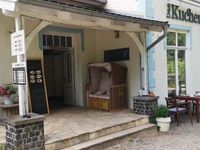
Kieler Woche Ende Juni
4.4 (232)Fleethörn 9-17, 24103 Kiel, Germany
Wheelchair accessible parking lot
Wheelchair accessible entrance
Marketing agency
Marketing

Schleswig-Holstein is located in northern Germany between the North Sea and the Baltic Sea. The North Sea coast is characterized by flat marshland, islands, and Halligen, while sandy geest landscapes dominate inland and the hillier Baltic region begins in the east.
Monthly averages for 2016–2025
Sources: Open-Meteo using Copernicus Climate Change Service ERA5
Historically, Schleswig-Holstein consists of several parts, including Southern Schleswig, Holstein, the Duchy of Lauenburg, and Lübeck. The former division along the Eider is im...
Historically, Schleswig-Holstein consists of several parts, including Southern Schleswig, Holstein, the Duchy of Lauenburg, and Lübeck.
The former division along the Eider is important for understanding the region: for a long time, it marked the border between Schleswig and Holstein, as well as between Danish and Imperial German spheres of influence.
Danish influence decreases toward the south, reflected, among other things, in language varieties and the Danish minority. Lübeck was not incorporated into the then Province of Schleswig-Holstein until 1937; historically, it belonged to neither Schleswig nor Holstein.
The easiest way to arrive is usually via Hamburg: Hamburg Airport is the most important air transport hub and has an S-Bahn connection. For destinations such as Kiel or Neumünst...
The easiest way to arrive is usually via Hamburg: Hamburg Airport is the most important air transport hub and has an S-Bahn connection. For destinations such as Kiel or Neumünster, the regular Kilius buses can be convenient.
In the north, Sylt Airport is also relevant, while Lübeck, Heide-Büsum, and, to a limited extent, Kiel offer additional options.
By train, most long-distance connections run via Hamburg; individual ICE and IC trains also stop in Flensburg, Kiel, Lübeck, Neumünster, Schleswig, Westerland, Husum, and in some cases continue to Denmark.
By road, the motorway network connects Schleswig-Holstein with Bremen, the Ruhr region, Hanover, and Mecklenburg-Western Pomerania. By water, travel is mainly practical via Baltic Sea connections to Kiel, Travemünde, and Puttgarden; on the North Sea, by contrast, there is no regular ferry service to Schleswig-Holstein.
Cycling is particularly well suited to exploring the state: signposted cycle routes can be found in almost all parts of the state, especially along the North Sea and Baltic Sea...
Cycling is particularly well suited to exploring the state: signposted cycle routes can be found in almost all parts of the state, especially along the North Sea and Baltic Sea coasts and the Elbe. Regional transport can be important when traveling between coastal regions, as not every connection runs frequently.
The NAH.SH public transport association brings together bus and rail services. The rail network is well developed across the state, and the Schleswig-Holstein fare applies to local transport within the state and as far as Hamburg.
For longer coastal journeys or cross-state trips, regional buses are often a practical complement to trains.
Schleswig-Holstein is strongly geared toward cycling and coastal activities. It is particularly known for long-distance cycle routes along the North Sea and Baltic Sea, along th...
Schleswig-Holstein is strongly geared toward cycling and coastal activities. It is particularly known for long-distance cycle routes along the North Sea and Baltic Sea, along the Elbe, and through the inland areas, such as the Eider-Treene-Sorge Cycle Route and the route through Holstein Switzerland.
The Kiel Canal also provides a distinctive route for tours by the water. Key events include Kiel Week at the end of June, Travemünde Week a few weeks later, and the Schleswig-Holstein Music Festival, with venues throughout the state. The Schleswig-Holstein Gourmet Festival takes place from September to March.
Those wishing to combine travel with culture or a maritime atmosphere will find the strongest seasonal highlights here.
The cuisine is rustic and rather hearty, clearly shaped by the North Sea and Baltic Sea as well as Scandinavian influences. Potatoes play a major role, as does the combination o...
The cuisine is rustic and rather hearty, clearly shaped by the North Sea and Baltic Sea as well as Scandinavian influences. Potatoes play a major role, as does the combination of savory main dishes with sweet or sweet-and-sour side dishes; this "contrasting sweetness" is typical of the region.
Classics such as pears, beans, and bacon or Holsteiner Sauerfleisch are useful options when choosing what to try. Dishes made with kale, Dithmarscher Mehlbeutel, and Kiel sprats are also characteristic specialties.
Those seeking regional cuisine will often find hearty, simple dishes featuring fish, meat, and seasonal side dishes.
Wild camping is permitted for one night outside campsites for non-motorized travelers. For longer stays, campsites and regular accommodations remain the more reliable choice, es...
Wild camping is permitted for one night outside campsites for non-motorized travelers. For longer stays, campsites and regular accommodations remain the more reliable choice, especially in the popular coastal and event regions.
Anyone visiting the coast, long-distance cycling routes, or major events should check accommodations early. Particularly on the North Sea and Baltic Sea coasts, capacity can become limited during the season.
Loading Wikipedia chapters…