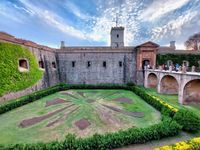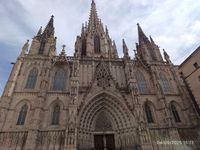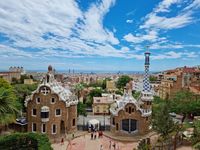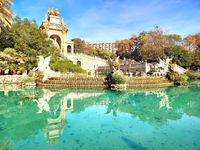
Barcelona, founded as the ancient Roman city of Barcino more than 2,000 years ago, combines a densely historic center with a modern city shaped by design, innovation, and an intense urban lifestyle. Its blend of beaches, architecture, museums, shopping, gastronomy, and entertainment makes it one of Europe's most visited destinations.
Essential facts
- Population
- 1,731,649
- As of 2025
- Currency
- Euro (EUR)
- Spoken Languages
- Spanish
- Area
- 101.3 km²
- Population density
- 17,094 / km²
Show all factsHide fact details
Administration
- Country
- Spain
- Administrative Region
- Barcelonés
- Head of Government
- Jaume Collboni
- Administrative Districts
- 10
Geography & Practical Information
- Elevation
- 9 m
- Postal code
- 08001–08042
- Calling code
- 34
- Vehicle registration
- B
- Official website
- barcelona.cat
Districts
An overview of the districts of Barcelona – with local character, practical facts, and detailed travel guides.
Distrito de Ciutat Vella
Distrito de Gràcia
Distrito de Les Corts
Distrito de Nou Barris
Distrito de Sant Andreu
Ensanche
Horta-Guinardó
Sant Martí
Sants-Montjuic
Sarrià-Sant Gervasi
Climate through the year
Monthly averages for 2016–2025
Sources: Open-Meteo using Copernicus Climate Change Service ERA5
Highlights
Teatre Victoria
PlaceVenue for prominent musicals & shows.
Maximum Escape 1
PlacePrivate tours in Madrid, Zaragoza, and Barcelona including transportation
BookableThis is a completely private experience.
Private tour of Barcelona from Madrid by high-speed train
BookableEmbark on an exclusive journey from Madrid to Barcelona aboard Spain's renowned high-speed train.
Professional photographer in Spain
BookableOur professional photographer Ivetta.
Transfer Lisbon - Spain (Seville | Madrid | Barcelona)
BookableWe have a new and comfortable fleet.
Private 7-day private tours and transportation in Madrid and Barcelona
BookableThis is a private 7-day experience.
Destination guide
Orientation
Barcelona stretches along the Mediterranean, alternating between a medieval old town, the Eixample's modernist grid, distinctive neighborhoods, and extensive coastal and park ar...
Orientation
Barcelona stretches along the Mediterranean, alternating between a medieval old town, the Eixample's modernist grid, distinctive neighborhoods, and extensive coastal and park ar...
Barcelona stretches along the Mediterranean, alternating between a medieval old town, the Eixample's modernist grid, distinctive neighborhoods, and extensive coastal and park areas.
The city is compact from a tourist perspective but highly diverse across its districts: Ciutat Vella concentrates the history, Eixample brings together grand avenues and modernism, Gràcia retains a village atmosphere, Sants-Montjuïc combines museums and hills, and Sant Martí showcases the waterfront's renewal.
Catalan and Spanish coexist naturally. To find your way around, remember that major avenues such as Diagonal, Gran Via, and Meridiana structure the urban map, while the ring roads help you bypass the center.
Areas such as the Gòtic, El Born, Barceloneta, the Raval, Passeig de Gràcia, and Montjuïc are the most useful starting points for exploring.
- Use the major urban axes as landmarks for finding your way around.
- Leave the main circuit to see neighborhood squares and streets.
- Set aside time for both higher and lower areas, as the city's elevation changes considerably.
- Assume that all the points of interest are in the historic center.
- Ignore the differences between tourist, residential, and entertainment areas.
- Language
- Catalan and Spanish are commonly used.
- Key neighborhoods
- Ciutat Vella, Eixample, Gràcia, Sants-Montjuïc, and Sant Martí.
- Urban form
- Old town, the Eixample grid, beaches, and nearby hills.
How to get there
The main airport is Barcelona-El Prat, about 13 km southwest of the city center. The most convenient and frequent connection is the Aerobús, which links to Plaça Catalunya and P...
How to get there
The main airport is Barcelona-El Prat, about 13 km southwest of the city center. The most convenient and frequent connection is the Aerobús, which links to Plaça Catalunya and P...
The main airport is Barcelona-El Prat, about 13 km southwest of the city center. The most convenient and frequent connection is the Aerobús, which links to Plaça Catalunya and Plaça Espanya. There are also city buses and regular services to El Prat and other parts of the city, as well as taxis at the terminals.
By train, Barcelona Sants is the main station for high-speed and long-distance services within Spain and to France. By bus, the Nord, Sants and Fabra i Puig terminals cover a large number of domestic and international destinations.
For those arriving by car, the ring roads make access easier, but in the center it is usually more practical to combine public transportation and taxis.
- Compare Aerobús, city buses and taxis based on your destination and schedule.
- If traveling by train, use Barcelona Sants as your main reference point.
- For intercity buses, check the correct terminal first.
- Assume that all airport routes depart from the same point.
- Leave booking international train travel until the last minute if you are looking for a better price.
- Airport
- Barcelona-El Prat (BCN), with T1 and T2 terminals.
- Quick access to the city center
- Aerobús to Plaça Catalunya and Plaça Espanya.
- Main station
- Barcelona Sants.
- Bus terminals
- Nord, Sants and Fabra i Puig.
Getting around
The integrated transport network makes it possible to get around almost the entire city with combined tickets. For visitors, the most useful option is usually the 10-journey pas...
Getting around
The integrated transport network makes it possible to get around almost the entire city with combined tickets. For visitors, the most useful option is usually the 10-journey pas...
The integrated transport network makes it possible to get around almost the entire city with combined tickets. For visitors, the most useful option is usually the 10-journey pass, which is valid on the metro, buses, trams, FGC and commuter trains within the permitted transfer period.
Zone 1 covers Barcelona and nearby municipalities, so that fare is usually sufficient. The metro, tram and bus are enough for most urban itineraries, while taxis are practical at night or for occasional trips. On buses, you need to signal at the stop if you want to board, as they do not always stop automatically.
The Barcelona Bus Turístic is useful if comfort and panoramic sightseeing are priorities, although it does not replace everyday transport.
- Use an integrated pass if you expect to make several journeys on the same day.
- Signal with your hand while waiting for the bus.
- Combine the metro with walking for medium distances in the city center.
- Assume the bus will stop without being signaled.
- Buy single tickets for journeys with several transfers if you plan to use public transport multiple times.
- Single Zone 1 ticket
- €2.15.
- T-10
- 10 integrated journeys with transfers within the permitted time.
- Included networks
- Metro, bus, tram, FGC and RENFE commuter trains.
- Useful zone
- Zone 1 covers Barcelona and the nearby surrounding areas.
What to see
Your visit can be organized around two main themes: the historic heritage of the city center and the Modernisme architecture of the Eixample and Montjuïc. La Sagrada Familia is...
What to see
Your visit can be organized around two main themes: the historic heritage of the city center and the Modernisme architecture of the Eixample and Montjuïc. La Sagrada Familia is...
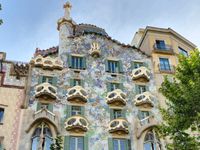
Your visit can be organized around two main themes: the historic heritage of the city center and the Modernisme architecture of the Eixample and Montjuïc. La Sagrada Familia is the best-known landmark, but Casa Batlló, La Pedrera and Park Güell also stand out for their strong Gaudí identity.
In the old town, Plaça del Rei, the Gothic Quarter and the area around La Rambla help explain the city's history. To combine architecture with open spaces, Parc de la Ciutadella, Montjuïc, the MNAC, the Fundació Joan Miró and Poble Espanyol offer a broader perspective.
If everyday atmosphere is the priority, La Boqueria, Barceloneta and El Born provide urban life, gastronomy and opportunities for a stroll.
- Combine at least one major monument with a historic neighborhood.
- Go up Montjuïc if you are interested in an urban and cultural panorama.
- Set aside time to wander aimlessly through Ciutat Vella and El Born.
- Limit your visit to just the most famous façades.
- Ignore opening hours and crowds at heavily visited monuments.
- Iconic landmark
- La Sagrada Familia is the city's best-known symbol.
- Modernist heritage
- Casa Batlló, Casa Milà, and Park Güell are UNESCO World Heritage Sites.
- Notable places
- Montjuïc, Ciutadella, Plaça del Rei, and La Rambla.
Things to do
Barcelona lends itself to many different activities within just a few kilometers: stroll through the Gothic Quarter, explore El Raval, soak up the seaside atmosphere in Barcelon...
Things to do
Barcelona lends itself to many different activities within just a few kilometers: stroll through the Gothic Quarter, explore El Raval, soak up the seaside atmosphere in Barcelon...
Barcelona lends itself to many different activities within just a few kilometers: stroll through the Gothic Quarter, explore El Raval, soak up the seaside atmosphere in Barceloneta, or experience football at Camp Nou.
It is also a city with a strong contemporary cultural scene, offering plenty of talks, museums, and nightlife.
For a more complete visit, it is worth alternating between different areas in the morning and afternoon: a walk through the historic center, an afternoon at a beach or park, and an evening in livelier neighborhoods.
If time is limited, the best strategy is to prioritize one clear urban experience—history, coast, or leisure—instead of trying to see everything.
- Combine the historic center, coast, and nightlife if your trip allows.
- Seek out less obvious neighborhoods to experience local life.
- Include a cultural activity or a seaside walk in your plans.
- Assume that the city can be experienced through a single central stroll.
- Leave the entire visit for nighttime or focus only on the monuments.
- Urban activity
- Walking through the Gothic Quarter and El Raval lets you see two very different sides of the city.
- Sport
- Camp Nou is one of the most representative experiences for football fans.
- Nightlife
- There is a wide range of leisure activities, music, and nightlife.
Food and drink
Barcelona's cuisine ranges from tapas, montaditos, and Mediterranean cooking to international offerings. For a quick and reliable meal, the most useful approach is to look for t...
Food and drink
Barcelona's cuisine ranges from tapas, montaditos, and Mediterranean cooking to international offerings. For a quick and reliable meal, the most useful approach is to look for t...
Barcelona's cuisine ranges from tapas, montaditos, and Mediterranean cooking to international offerings. For a quick and reliable meal, the most useful approach is to look for tapas bars and restaurants in lively neighborhoods, where the selection is usually broad and the atmosphere more local.
La Boqueria remains the main market for fresh produce, although it is best to go patiently because of the crowds. At night, nightlife is spread across areas such as Poble Nou, Marina, Paral·lel, and various bars in the center.
In general, Barcelona offers good food at a range of prices, but the experience is better if you choose places with a clear specialty and avoid sticking only to the most touristy stretches.
- Try tapas and montaditos at specialty bars.
- Go to the market early or during less busy hours if you want to avoid crowds.
- Choose different areas depending on whether you want a quiet dinner or a night out.
- Expect fast service in very small, popular establishments.
- Rely only on the most touristy areas to eat well.
- Dishes and customs
- Pa amb tomàquet, tapas, montaditos, sangria, and fresh market produce.
- Key market
- La Boqueria, on La Rambla.
- Nightlife areas
- Poble Nou, Marina, and Paral·lel are lively areas.
Where to stay
Barcelona offers everything from hostels and guesthouses to luxury hotels and apartments. For a practical stay, the most convenient neighborhoods are usually Eixample, Ciutat Ve...
Where to stay
Barcelona offers everything from hostels and guesthouses to luxury hotels and apartments. For a practical stay, the most convenient neighborhoods are usually Eixample, Ciutat Ve...
Barcelona offers everything from hostels and guesthouses to luxury hotels and apartments. For a practical stay, the most convenient neighborhoods are usually Eixample, Ciutat Vella, Sants, and areas near Plaça Catalunya, Passeig de Gràcia, or Sants Estació, as they make transportation easier and reduce long journeys.
Travelers seeking moderate prices will find many options in hostels and simple apartments, while those who prefer comfort and a central location will have a wide range of hotels to choose from.
During the high season, it is advisable to book in advance, especially in highly sought-after areas and accommodations near the Ramblas, Sagrada Familia, and Sants station.
- Choose a neighborhood according to the type of trip: leisure, culture, or connections.
- Book early for high-demand dates.
- Check access to public transportation before confirming your accommodation.
- Choose solely based on price without considering the location.
- Underestimate the actual distance between the beach, city center, and station.
- Accommodation options
- Apartments, guesthouses, pensions, hostels, hotels, and family rooms.
- Convenient areas
- Eixample, Ciutat Vella, Sants, and the area around Plaça Catalunya or Passeig de Gràcia.
- Convenience
- A central location reduces travel times.
Shopping
The most useful shopping areas are Raval, the area around the Ramblas, Calle de Sants, and parts of Eixample and El Born. Raval is home to design stores and alternative fashion;...
Shopping
The most useful shopping areas are Raval, the area around the Ramblas, Calle de Sants, and parts of Eixample and El Born. Raval is home to design stores and alternative fashion;...
The most useful shopping areas are Raval, the area around the Ramblas, Calle de Sants, and parts of Eixample and El Born.
Raval is home to design stores and alternative fashion; Sants serves as a neighborhood shopping hub; and the area around Plaça Catalunya and Passeig de Gràcia offers more central options with heavier foot traffic.
The Maremágnum and La Maquinista shopping centers expand the range, but part of Barcelona's appeal also lies in its small shops, bookstores, and specialty stores. For gifts, accessories, and clothing, it is usually more practical to combine shopping streets with an aimless stroll.
- Explore side streets near the best-known areas.
- Look for small shops as well as large shopping centers.
- Combine shopping with coffee or tapas in the same neighborhood.
- Limit your shopping to a single shopping center.
- Assume that all the best shops are on the main avenues.
- Key areas
- Raval, Calle de Sants, the area around the Ramblas, and Eixample.
- Shopping centers
- Maremágnum and La Maquinista.
- Profile
- A mix of design stores, neighborhood shops, and large shopping centers.
Practical information
Barcelona requires the usual big-city precautions, especially against opportunistic theft on public transportation, at stations, and in very crowded areas. Keep pockets closed,...
Practical information
Barcelona requires the usual big-city precautions, especially against opportunistic theft on public transportation, at stations, and in very crowded areas. Keep pockets closed,...
Barcelona requires the usual big-city precautions, especially against opportunistic theft on public transportation, at stations, and in very crowded areas. Keep pockets closed, do not leave luggage unattended, and avoid displaying valuables.
In taxis, it is reasonable to ask for an approximate fare before getting in and to keep the receipt. In terms of healthcare, the city has several major hospitals, including Vall d'Hebron, Sant Pau, Hospital del Mar, and Clínic.
For short trips from Barcelona, highlights include Montserrat, Sitges, Castelldefels, Girona, the Costa Brava, and Tarragona, as well as natural areas such as Montseny and Parc del Garraf.
- Use inside pockets and keep an eye on your luggage at stations.
- Ask for a receipt in taxis and when using services, when necessary.
- Consider day trips if your stay is long.
- Leave your phone or wallet unattended on the table.
- Let your guard down at stations, on buses, or in crowded carriages.
- Common risk
- Opportunistic theft on the metro, buses, at stations, and in crowded areas.
- Key precaution
- Do not leave luggage or valuables unattended.
- Medical centers
- Vall d'Hebron, Sant Pau, Hospital del Mar, and Hospital Clínic.
- Nearby excursions
- Montserrat, Sitges, Castelldefels, Girona, Tarragona, Montseny, and Parc del Garraf.
More about Barcelona
Loading Wikipedia chapters…