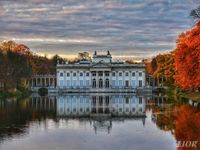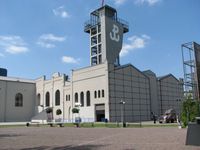
Warsaw is Poland's capital and largest city, and one of the European Union's fastest-developing capitals. The city combines rebuilt historic districts with modern development, so the overall feel is constantly changing rather than fixed in one style.
Essential facts
- Population
- 1,862,402
- As of 2024-06-31
- Spoken Languages
- Polish
- Area
- 517 km²
- Population density
- 3,602 / km²
Show all factsHide fact details
Administration
- Country
- Poland
- Administrative Region
- Masovian Voivodeship
- Head of Government
- Rafał Trzaskowski
- Administrative Districts
- 18
Geography & Practical Information
- Elevation
- 118 m
- Postal code
- 00-000
- Calling code
- 48
- Vehicle registration
- WA, WB, WD, WE, WF, WH, WI, WJ, WK, WN, WT, WU, WW...A/C/E/X/Y, WW...F/G/H/J/W, WW...K/L/M/N/P/R/S/U/V, WX...Y, WX, WY
- Official website
- um.warszawa.pl
Districts
An overview of the districts of Warsaw – with local character, practical facts, and detailed travel guides.
Bemowo
Białołęka
Bielany
Mokotów
Ochota
Praga-Północ
Praga-Południe
Rembertów
Śródmieście
Targówek
Ursus
Ursynów
Wawer
Wesoła
Wilanów
Włochy
Wola
Żoliborz
Climate through the year
Monthly averages for 2016–2025
Sources: Open-Meteo using Copernicus Climate Change Service ERA5
Highlights
Destination guide
Orientation
Warsaw lies on the Vistula River in central Poland and is divided into a larger left-bank western side and a smaller right-bank eastern side. The city centre, Śródmieście, is on...
Orientation
Warsaw lies on the Vistula River in central Poland and is divided into a larger left-bank western side and a smaller right-bank eastern side. The city centre, Śródmieście, is on...
Warsaw lies on the Vistula River in central Poland and is divided into a larger left-bank western side and a smaller right-bank eastern side. The city centre, Śródmieście, is on the left bank, while the right bank is often referred to as Praga.
The historic core of the left bank sits back from the river on the Warsaw escarpment. The city's layout is easiest to understand by keeping two landmarks in mind: the Palace of Culture and Science and the intersection of Al. Jerozolimskie with ul. Marszałkowska near Metro Centrum.
The Palace is visible from much of the city and is a useful reference point if lost. Street numbering follows river-based conventions in many areas, though there are exceptions.
- Use the Palace of Culture and Science as a visual orientation point.
- Expect the city to be split between left-bank and right-bank districts.
- Look for MSI neighbourhood names on street signage when navigating.
- Do not assume the riverbank is tightly lined with historic buildings; the riverfront is broad and partly open.
- Do not rely on street-number patterns without checking for exceptions.
- River crossing
- Vistula divides the city north–south
- Main centre
- Śródmieście on the left bank
- Central point
- Al. Jerozolimskie and ul. Marszałkowska near Metro Centrum
- Landmark
- Palace of Culture and Science
Getting there
Warsaw is served by two airports. Chopin Airport (WAW), 8 km south of the centre, is the main airport and is the easier choice for most arrivals. Modlin (WMI), 40 km north, is m...
Getting there
Warsaw is served by two airports. Chopin Airport (WAW), 8 km south of the centre, is the main airport and is the easier choice for most arrivals. Modlin (WMI), 40 km north, is m...
Warsaw is served by two airports. Chopin Airport (WAW), 8 km south of the centre, is the main airport and is the easier choice for most arrivals. Modlin (WMI), 40 km north, is mainly used by low-cost carriers and requires additional transfer time.
By train, Warsaw is well connected with major cities such as Berlin, Kraków, Gdańsk, Prague, Vienna and Budapest. Long-distance trains usually cross the city and stop at several main stations. Warszawa Centralna is the most convenient for sightseeing, while Warszawa Zachodnia and Warszawa Wschodnia are also major hubs.
By bus, most intercity services use Warszawa Zachodnia, with some stops at Metro Wilanowska or Metro Młociny. If arriving by car, follow the blue-on-white Centrum signs toward the centre.
- Choose Chopin Airport for the easiest arrival into the city.
- Use Warszawa Centralna for the shortest access to major central sights.
- Allow extra time when transferring from Modlin due to the shuttle-plus-train journey.
- Do not assume Modlin is close to the city centre.
- Do not expect most international buses to use a single 'central bus station'.
- Main airport
- Warsaw Chopin (WAW), 8 km south of the centre
- Secondary airport
- Warsaw Modlin (WMI), 40 km north
- Main rail stations
- Warszawa Zachodnia, Warszawa Centralna, Warszawa Wschodnia
- Main intercity bus hub
- Dworzec PKS Warszawa Zachodnia
Getting around
Warsaw has a broad public transport network with buses, trams, two metro lines and regional SKM trains, all using one fare and ticketing system. This makes cross-city travel pra...
Getting around
Warsaw has a broad public transport network with buses, trams, two metro lines and regional SKM trains, all using one fare and ticketing system. This makes cross-city travel pra...
Warsaw has a broad public transport network with buses, trams, two metro lines and regional SKM trains, all using one fare and ticketing system. This makes cross-city travel practical, although journeys away from the centre can still take time.
Paper tickets must be validated, while mobile tickets can be used through the jakdojade app. The metro is clean, frequent and simple, but it does not reach every major sight. SKM trains are useful for longer trips and airport access, while the bike-share system Veturilo is best for short rides in warmer months.
For cars, parking in the centre is paid on weekdays, and taxis are regulated, with receipts required.
- Use jakdojade or a similar planner for public transport connections.
- Validate paper tickets on board immediately after boarding.
- Use SKM for airport and longer suburban trips.
- Consider walking in the compact centre and Old Town area.
- Do not assume the metro reaches all attractions directly.
- Do not rely on taxis that are not properly registered.
- Do not forget parking restrictions in the central paid zone.
- Bus routes
- About 200
- Tram lines
- About 30
- Metro lines
- 2
- Bike share
- Veturilo, operating March to November
Sights
Sights
- Start with the Old Town and the Royal Route if time is limited.
- Include at least one major museum in a history-focused visit.
- Use the Vistula boulevards for a relaxed walk or break from dense sightseeing.
- Do not expect most sights to be spread evenly across all districts.
- Do not skip the rebuilt historic core if Warsaw's history is the main interest.
- UNESCO site
- Warsaw Old Town
- Main sightseeing area
- Śródmieście
- Key park
- Łazienki Park
- River promenade
- Vistula Boulevards
Things to do
Warsaw works well for walking tours, which are one of the best ways to understand the city's history and contrasts. The compact Old Town and nearby central districts make it pos...
Things to do
Warsaw works well for walking tours, which are one of the best ways to understand the city's history and contrasts. The compact Old Town and nearby central districts make it pos...
Warsaw works well for walking tours, which are one of the best ways to understand the city's history and contrasts. The compact Old Town and nearby central districts make it possible to cover a lot on foot.
The city also has a strong performance calendar, with opera, philharmonic concerts, Chopin recitals and club events. Seasonal festivals, museum nights and major charity events add further options, while football is the most visible spectator sport.
- Book a walking tour to understand the city's historical layers.
- Check concert and festival calendars in advance.
- Use museum night for late-opening venues if the timing fits.
- Pick clubs with appropriate dress and entry expectations.
- Do not expect every venue or event to be concentrated in one district.
- Do not wear sport shoes to high-end clubs if avoiding entry problems is important.
- Walking tours
- Well suited to the compact centre and Old Town
- Major performance venues
- Polish National Opera and Warsaw Philharmonic
- Music venues
- Stadion Narodowy and clubs around the centre
- Museum night
- Noc Muzeów usually occurs around mid-May
Food and drink
Warsaw has a broad food scene, ranging from inexpensive kebabs and milk bars to high-end restaurants and Michelin-starred dining. Budget options are especially common in Śródmie...
Food and drink
Warsaw has a broad food scene, ranging from inexpensive kebabs and milk bars to high-end restaurants and Michelin-starred dining. Budget options are especially common in Śródmie...
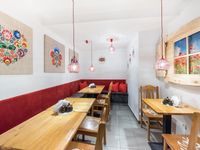
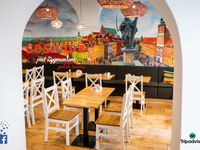
Warsaw has a broad food scene, ranging from inexpensive kebabs and milk bars to high-end restaurants and Michelin-starred dining. Budget options are especially common in Śródmieście, while upscale dining is strongest away from the most obvious tourist streets.
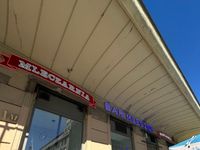
For drinks, cafés are abundant in the central districts and on the Old Town side streets, and beer and coffee prices vary widely by venue. Milk bars remain useful for cheap meals and also give a glimpse of older local dining culture.
- Use milk bars for inexpensive meals and a local atmosphere.
- Look beyond the Royal Route for better upscale dining options.
- Check district guides for newer restaurants and cafés.
- Do not assume the best food is concentrated only in the tourist core.
- Do not expect public alcohol consumption to be generally allowed.
- Budget meal options
- Kebab shops, milk bars and Vietnamese restaurants
- High-end areas
- Śródmieście away from the Royal Route, Saska Kępa and Wilanów
- Typical coffee price
- About 10–15 zł
- Typical beer price
- About 5–15 zł for half a liter
Sleep
Warsaw has accommodation at all budget levels, with the greatest concentration in Śródmieście, Wola and Mokotów. Business hotels are also common near the airport in Włochy. Beca...
Sleep
Warsaw has accommodation at all budget levels, with the greatest concentration in Śródmieście, Wola and Mokotów. Business hotels are also common near the airport in Włochy. Beca...
Warsaw has accommodation at all budget levels, with the greatest concentration in Śródmieście, Wola and Mokotów. Business hotels are also common near the airport in Włochy. Because there is an oversupply of higher-standard rooms, good rates are often available, especially for weekend stays.
A practical point is that breakfast is often not included, and hotel breakfast charges can be high. Budget travellers should not assume hostels are the only value option; advance booking in 3- or 4-star hotels can sometimes be nearly as cheap with much better comfort.
- Compare weekend rates and special offers before booking.
- Check breakfast pricing before confirming a room.
- Consider 3- and 4-star hotels as a value option.
- Do not assume breakfast is included.
- Do not restrict the search to hostels when travelling on a budget.
- Main hotel areas
- Śródmieście, Wola and Mokotów
- Airport hotel area
- Włochy
- Value range
- Modern four- or five-star rooms can be affordable
- Camping
- Available in several outer districts
Shopping
Cash machines are plentiful, cards are widely accepted, and shopping malls are common across the city. Malls usually have food courts, restaurants and cinemas, and many remain o...
Shopping
Cash machines are plentiful, cards are widely accepted, and shopping malls are common across the city. Malls usually have food courts, restaurants and cinemas, and many remain o...
Cash machines are plentiful, cards are widely accepted, and shopping malls are common across the city. Malls usually have food courts, restaurants and cinemas, and many remain open daily, though Sunday trading restrictions mean that shopping on Sundays can be limited.
For everyday supplies, large supermarket chains and discount grocers are easy to find. The main practical point for visitors is that small owner-run shops are often the only dependable option on Sundays.
- Use malls for one-stop shopping, food and services.
- Keep Sunday restrictions in mind when planning supplies.
- Use owner-run convenience shops if shopping is needed on Sunday.
- Do not assume all supermarkets or chains will be open on Sunday.
- Do not rely on AmEx or Diners' Club being accepted everywhere.
- ATMs
- Widely available
- Common cards
- Visa, MasterCard, Visa Electron and Maestro
- Typical mall hours
- Usually 08:00–22:00
- Sunday trading
- Most shops are closed on Sundays
Practical information
For basic services, the city has 24-hour post office access, a city information line and widespread mobile phone options. The area code for Warsaw is 22 and must be used even fo...
Practical information
For basic services, the city has 24-hour post office access, a city information line and widespread mobile phone options. The area code for Warsaw is 22 and must be used even fo...
For basic services, the city has 24-hour post office access, a city information line and widespread mobile phone options. The area code for Warsaw is 22 and must be used even for local calls. Prepaid SIM cards are inexpensive, though purchase may require a locally issued ID.
Warsaw is generally safe, especially in the centre, but standard precautions are still appropriate around stations, in nightlife areas and in crowded transport. Taxi overcharging can happen, so registered taxis or app-based services are safer choices.
Emergency numbers are 997 for police, 998 for firefighters, 999 for ambulance, and 112 works as well.
- Keep the area code 22 in mind for local calling.
- Use registered taxis or ride-hailing for clearer pricing.
- Carry identification and essential documents when needed.
- Do not rely on pay phones as a primary communication method.
- Do not accept unregistered taxi or pub-crawl offers without caution.
- Do not ignore pickpocket risks in crowds and on busy buses.
- Area code
- 22
- City info line
- +48 19 115
- Emergency number
- 112
- Main post office
- Central Post Office, open 24/7
Connectivity
Free wi-fi is widely available across Warsaw, including municipal hot spots, many buses and some trams, as well as cafés and restaurants. This makes short-stay connectivity rela...
Connectivity
Free wi-fi is widely available across Warsaw, including municipal hot spots, many buses and some trams, as well as cafés and restaurants. This makes short-stay connectivity rela...
Free wi-fi is widely available across Warsaw, including municipal hot spots, many buses and some trams, as well as cafés and restaurants. This makes short-stay connectivity relatively easy without needing constant mobile data.
Internet cafés are rare, but a few public-access computer options still exist near the centre and in the Old Town area. For most visitors, municipal wi-fi, café wi-fi or a prepaid SIM will be the simplest solution.
- Use municipal hot spots for basic free connectivity.
- Check café passwords or access rules when needed.
- Consider a prepaid SIM for reliable mobile data.
- Do not expect many traditional internet cafés.
- Do not assume all public networks are open without a password or agreement page.
- Municipal wifi network
- freewifi.waw.pl
- Coverage
- Over 150 localities and over 300 city buses
- Computer access
- Available at some tourist and café locations
- Internet cafés
- Rare
More about Warsaw
Loading Wikipedia chapters…