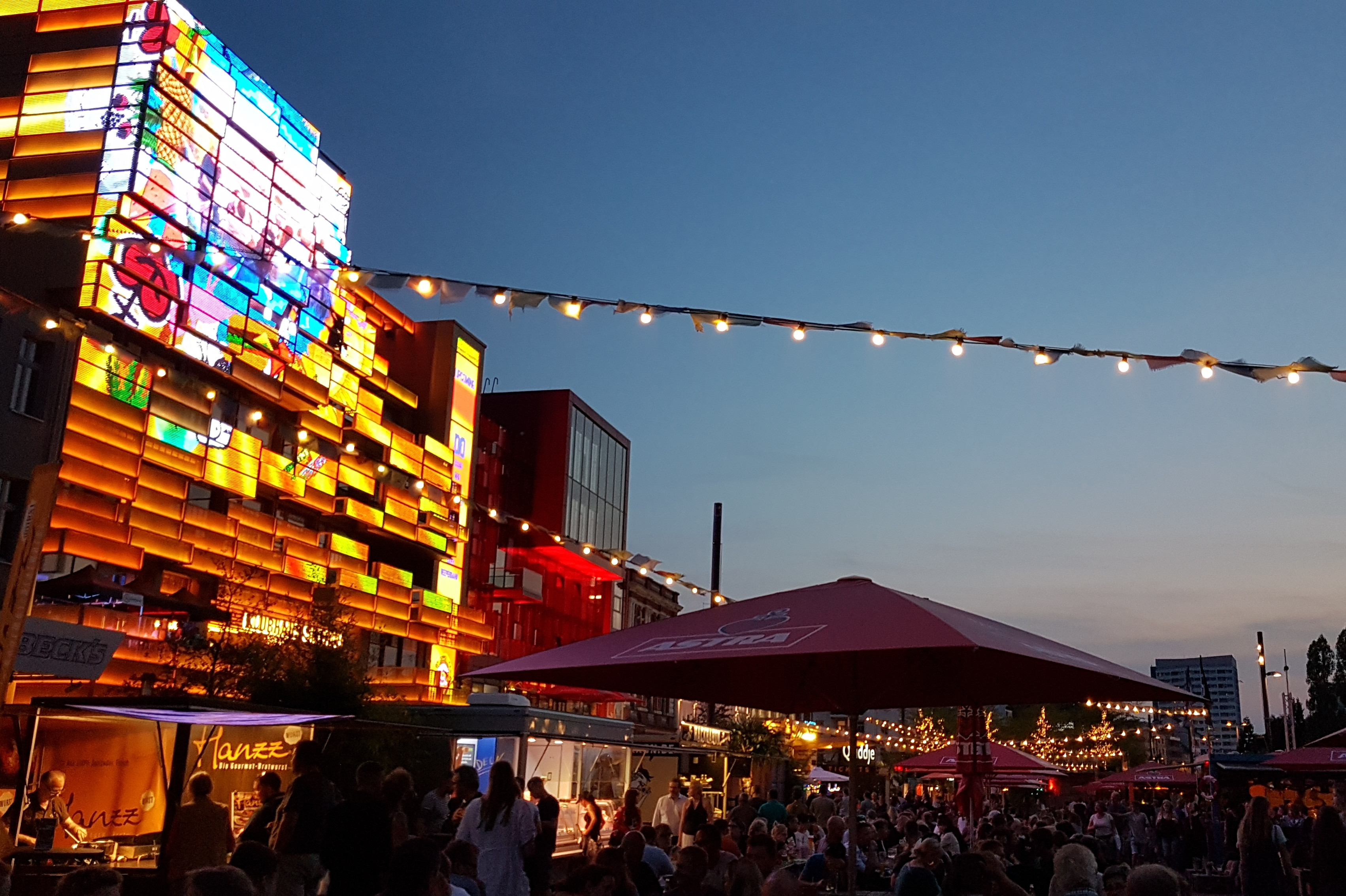


"St. Lustig"e hoş geldiniz! (Spielbudenplatz/Davidstraße)
Once the Davidstraße is crossed heading east, St. Pauli's "cheerful pavement" begins with the Spielbudenplatz. Here, on large and small stages, you'll find theater and operetta, cabaret, wax figures, musicals, and clubs with all kinds of music for everyone.
This square has been a place of entertainment since the end of the 18th century. Back then, showmen displayed their sensations in wooden fairground stalls, and there was sausage and beer, wild animals, and Punch and Judy shows. These cheerful, "family-friendly" entertainments eventually earned the area around Spielbudenplatz the nickname "St. Lustig" (St. Merry).
All sorts of goods could be bought here – at a much cheaper suburban price than in Hamburg's shops, because until 1888, the Millerntor was a customs border, and goods imported into the city from St. Pauli, for example, were subject to duties. If they were sold outside the Millerntor, the surcharge was waived.
Who were your predecessors on the Spielbudenplatz two centuries ago?
"Respectable country folk, sailors, craftsmen, and maids who found cheaper goods and more polite service in these shops than in many a city establishment." (J. Heckscher: Peter Suhr's Panorama "From Hamburg to Altona and Back". Berlin, 1909. p. 74)
Around 1840, the stalls were demolished, and Spielbudenplatz, on the threshold of the city of Hamburg, received magnificent, solidly built houses that were rented by showmen and restaurateurs. From the perspective of Joseph Heckscher, a Hamburg scholar, this was a deterioration. In 1909, he wrote: "The entertainment of the common man, which he otherwise found on the street for a few shillings, is ruined, and he now has to kill his time for hard cash in beer palaces and with ear-splitting music."
Popülerlik saatleri
Cumartesi
Bugün