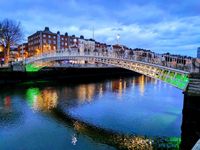
Dublin is the capital of Ireland and the country's main entry point for international visitors. It is known for its nightlife, vibrancy and major tourist attractions. The city is compact enough for much of it to be explored on foot, but it is also divided by the River Liffey into distinct northside and southside areas.
Essential facts
- Population
- 592,713
- As of 2022-04-03
- Spoken Languages
- English
- Area
- 115 km²
- Population density
- 5,154 / km²
Show all factsHide fact details
Administration
- Country
- Ireland
- Administrative Region
- Dublin City
- Head of Government
- Daryl Barron
- Legislative Body
- legislative body of Dublin City Council
Geography & Practical Information
- Elevation
- 20 m
- Established
- 0841
- Postal code
- D1-18, 20, 22, 24, D6W, D1-18, 20, 22, D6W
- Calling code
- 353
- Official website
- www.dublincity.ie
Climate through the year
Monthly averages for 2016–2025
Sources: Open-Meteo using Copernicus Climate Change Service ERA5
Highlights
Dublin to Cliffs of Moher, including the Wild Atlantic Way and Galway
BookableDay trip from Dublin to Ireland's remote and rugged west coast to see the Cliffs of Moher, the Burren, and Galway City.
Kilkenny, Wicklow and Glendalough Sheepdog Trials from Dublin
BookableDiscover everything that makes Ireland unique on this full-day tour from Dublin, combining breathtaking landscapes, rich history, and authentic rural experiences.
Dublin to Belfast Black Cab: Dunluce Castle and Giant's Causeway
BookableTravel from Dublin on a full-day journey through some of Northern Ireland's most fascinating historic sites and spectacular landscapes.
Dublin Highlights and Hidden Gems Guided Walking Tour
BookableWe love Dublin, and we love showing people around Dublin—the city with a long and illustrious history that we are proud to be a part of.
Irish Rock 'N' Roll Museum Experience Dublin
BookableTravel through Ireland's musical history on this 75-minute tour!
Guinness Storehouse experience
BookableWelcome to the home of Guinness.
Dublin Jameson Distillery Tour and Tasting 45 Minutes
BookableDiscover the home of Jameson Whiskey in the heart of Smithfield, Dublin.
The Little Museum of Dublin Famous Tour
BookableNowhere else is there anything quite like the Little Museum of Dublin.
Destination guide
Orientation
Central Dublin is easiest to understand as a northside-southside city split by the Liffey. North of the river, O'Connell Street is the main axis, with Henry Street and Mary Stre...
Orientation
Central Dublin is easiest to understand as a northside-southside city split by the Liffey. North of the river, O'Connell Street is the main axis, with Henry Street and Mary Stre...
Central Dublin is easiest to understand as a northside-southside city split by the Liffey. North of the river, O'Connell Street is the main axis, with Henry Street and Mary Street as key shopping streets.
South of the river are many of the major sights, including Trinity College, St Stephen's Green, Merrion Square, Christ Church and St Patrick's Cathedrals, and the main branches of the National Museum.
The city's historic core is concentrated west of Trinity and around Temple Bar, while the Georgian east and south side are more spacious and generally more attractive. Postal districts still help with orientation: Dublin 1 is north of the river around the Post Office, and Dublin 2 is south around Trinity College.
Eircodes are used for exact addresses. Electricity is 230V with Type G plugs.
- Use the river as the main orientation point.
- Use Eircodes for precise navigation when available.
- Do not expect every tourist information desk to be official; some are private tour sellers.
- electricity
- 230V, Type G plugs
- districts
- Dublin 1 north of the river; Dublin 2 south of the river
- main north axis
- O'Connell Street
- main south sights
- Trinity College, St Stephen's Green, Merrion Square
Getting there
Dublin Airport is about 10 km north of the city centre and has the widest range of flights. There is no rail or metro link between airport and city, so bus or taxi are the pract...
Getting there
Dublin Airport is about 10 km north of the city centre and has the widest range of flights. There is no rail or metro link between airport and city, so bus or taxi are the pract...
Dublin Airport is about 10 km north of the city centre and has the widest range of flights. There is no rail or metro link between airport and city, so bus or taxi are the practical options. Aircoach, Dublin Express and Dublin Bus serve the airport, with local buses being cheaper but slower.
By rail, Connolly serves the north and east coast routes, while Heuston serves the south, west and southwest. Busáras bus station is beside Connolly and handles many intercity bus services. Dublin Port has ferries from Holyhead and Douglas.
For day trips by car, park-and-ride sites at the edge of the city are recommended instead of driving into the centre.
- Use airport buses or taxis rather than expecting rail or metro.
- Use park-and-ride if arriving by car for a day in the city.
- Do not drive into the congested centre unless necessary.
- airport distance
- 10 km north of city centre
- airport-city link
- No rail or metro link
- main rail stations
- Connolly and Heuston
- ferries
- Holyhead and Douglas to Dublin Port
Getting around
Much of Dublin can be covered on foot, especially the central districts. Public transport is a mix of trains, trams and buses, with buses the main option because the rail networ...
Getting around
Much of Dublin can be covered on foot, especially the central districts. Public transport is a mix of trains, trams and buses, with buses the main option because the rail networ...
Much of Dublin can be covered on foot, especially the central districts. Public transport is a mix of trains, trams and buses, with buses the main option because the rail network is limited.
TFI is the umbrella brand for journey planning and real-time information, but tickets and operations are handled by the individual operators. A Leap Card is the most useful payment method for frequent use, with flat fares on Dublin Bus and Luas and discounting on rail. On buses, exact coins are required if paying cash.
On trains and trams, tickets are bought before boarding; on buses, passengers usually tag on or pay the driver. Taxis are regulated and accept cards, but booking by phone or app can add a surcharge. Cycling is possible but Dublin is not especially bike-friendly, and traffic can be challenging.
- Consider a Leap Card for multiple journeys.
- Check live departures with TFI tools or Google Maps.
- Use trams and buses together for central travel.
- Do not rely on contactless bank cards for public transport.
- Do not assume buses will stop unless the driver sees a signal to board.
- main public transport
- Buses, trams and trains
- payment
- Leap Card, exact coins for cash bus fares
- tram system
- Luas
- taxi rule
- Metered and card-accepting
Sights
Sights
- Book timed-entry attractions in advance in summer.
- Use the free national museums to balance paid highlights.
- Combine Trinity, Grafton Street and the museum quarter in one southside day.
- Do not leave the Book of Kells for last-minute booking.
- Do not plan to spend much leisure time on O'Connell Street.
- best-known south side sights
- Trinity College, National Museum, National Gallery, St Patrick's Cathedral, Dublin Castle
- north side cluster
- Parnell Square and GPO area
- booking advice
- Book ahead in summer, especially for the Book of Kells
Things to do
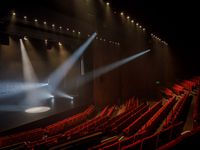
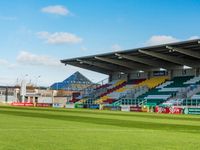
Dublin offers a strong mix of brewery and distillery tours, walking tours, theatre and live sports.
Things to do
Dublin offers a strong mix of brewery and distillery tours, walking tours, theatre and live sports.
- Reserve major tours in advance if visiting in summer.
- Use walking tours for a compact introduction to the city.
- Check event timing for sports and theatre before planning evenings.
- Do not expect every distillery tour to be a working production site; some are museum-style experiences.
- major tours
- Guinness Storehouse, Teeling Distillery, Jameson Distillery
- major theatres
- Abbey, Gaiety, Gate
- major sports venues
- Croke Park, Aviva Stadium, RDS Arena
Food and drink
Dublin has a wide range of restaurants, cafés and pubs, though prices are often high by European standards. There is now strong availability of Indian, Chinese, vegetarian, vega...
Food and drink
Dublin has a wide range of restaurants, cafés and pubs, though prices are often high by European standards. There is now strong availability of Indian, Chinese, vegetarian, vega...
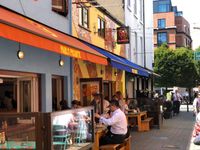
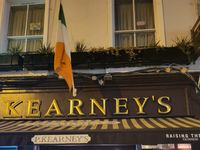
Dublin has a wide range of restaurants, cafés and pubs, though prices are often high by European standards. There is now strong availability of Indian, Chinese, vegetarian, vegan and gluten-free options. A notable local pattern is the broad pub-food culture: many pubs now serve substantial meals as well as drinks.
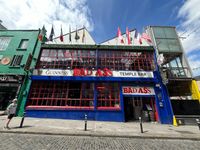
Temple Bar is the most concentrated drinking area, with very high visitor traffic and a lively but often crowded atmosphere. Outside that district, there are many better options for a calmer meal or pint.
Traditional pubs, modern bars and microbreweries are spread across the centre, with useful clusters around Temple Bar, Grafton Street, Smithfield, Merrion Row and the canal area.
- Look beyond Temple Bar for a less crowded evening.
- Expect pubs to serve food more often than in the past.
- Try local beer or whiskey venues if interested in drinks culture.
- Do not assume Temple Bar represents the whole city's pub scene.
- Do not expect smoking inside pubs.
- water
- Fresh and clean from the Wicklow Mountains
- pub density
- Over 600 pubs
- typical drink prices
- Higher in Temple Bar
- dietary options
- Vegetarian, vegan and GF widely available
Sleep
Accommodation is plentiful, but location matters. Cheaper options are often north of the river near Busáras and Connolly, while the south side is usually more expensive. Central...
Sleep
Accommodation is plentiful, but location matters. Cheaper options are often north of the river near Busáras and Connolly, while the south side is usually more expensive. Central...
Accommodation is plentiful, but location matters. Cheaper options are often north of the river near Busáras and Connolly, while the south side is usually more expensive. Central hotels and hostels are useful for short stays, but Temple Bar can be noisy and some northside areas are less attractive at night.
For budget stays, hostels around Talbot Street, Bachelors Walk and Smithfield are practical. Mid-range and upscale hotels are spread through the Georgian core, Ballsbridge, and along the airport corridor.
Airport hotels are useful only if the flight schedule justifies the location; many city visitors will find central accommodation more convenient.
- Choose central accommodation for sightseeing.
- Check whether parking is included before booking if arriving by car.
- Do not assume a 'central' hotel will also be quiet.
- budget pattern
- Cheaper north of the river, near Busáras
- noise note
- Temple Bar can be noisy
- airport hotels
- Useful mainly for flight connections
Shopping
The principal shopping street is Grafton Street on the south side, with department stores, bookshops and gift shopping nearby on Nassau Street and Dawson Street. The area around...
Shopping
The principal shopping street is Grafton Street on the south side, with department stores, bookshops and gift shopping nearby on Nassau Street and Dawson Street. The area around...
The principal shopping street is Grafton Street on the south side, with department stores, bookshops and gift shopping nearby on Nassau Street and Dawson Street. The area around Powerscourt Centre and George's Street Arcade is useful for boutiques, cafés and more independent shops.
Temple Bar also has some small independent shops and Saturday markets. North of the river, shopping is concentrated in the quarter around Henry Street, Jervis Street, Parnell Street and Abbey Street, with larger centres, bookshops and the Moore Street market.
For larger mall-style shopping, edge-of-city centres such as Dundrum Town Centre, Liffey Valley and Blanchardstown are the main options.
- Use Grafton Street and nearby lanes for central shopping.
- Check northside centers for a denser cluster of stores and books.
- Do not expect central Dublin to be cheap shopping.
- main shopping street
- Grafton Street
- northside shopping core
- Henry Street and Jervis Street area
- larger malls
- Dundrum Town Centre, Liffey Valley, Blanchardstown
Practical information
Dublin remains relatively safe, but the source notes a decline in conditions in recent years, especially in parts of the city centre. The official emergency number is 999 or 112...
Practical information
Dublin remains relatively safe, but the source notes a decline in conditions in recent years, especially in parts of the city centre. The official emergency number is 999 or 112...
Dublin remains relatively safe, but the source notes a decline in conditions in recent years, especially in parts of the city centre. The official emergency number is 999 or 112.
The city also has a strong contrast between well-kept streets and areas with vacant buildings, litter or anti-social behaviour, sometimes only a short walk apart. For minor illness, private walk-in medical centres are available in the centre, though EHIC/GHIC does not apply.
Dublin has 5G coverage from all Irish carriers across the city and approach roads, and public libraries offer free Wi‑Fi and internet access if registered. Visitors from outside the EU may be able to claim VAT refunds on some goods.
- Use official transport and apps for up-to-date routing.
- Use public libraries for free Wi-Fi if registered.
- Ask shops about VAT refund eligibility when shopping.
- Do not expect EHIC/GHIC to cover private walk-in clinics.
- Do not leave valuables visible in cars.
- emergency number
- 999 or 112
- medical care
- Private walk-in centres available
- connectivity
- 5G across the city and approach roads
- VAT refund
- Possible for some goods
Safety
The most important safety advice is to keep awareness high in central areas, especially around O'Connell Street, Lower Abbey Street, the Liffey Boardwalk and Connolly station. T...
Safety
The most important safety advice is to keep awareness high in central areas, especially around O'Connell Street, Lower Abbey Street, the Liffey Boardwalk and Connolly station. T...
The most important safety advice is to keep awareness high in central areas, especially around O'Connell Street, Lower Abbey Street, the Liffey Boardwalk and Connolly station. The source also advises avoiding O'Connell Street at all times and steering clear of some rough areas at night.
Traffic can be congested, and drivers may ignore pedestrian signals. If there is trouble, nearby shops, bars and pub staff are suggested as places to seek help when Gardaí are not immediately visible.
The source says Temple Bar's crowd density offers some measure of safety, though it is also packed and can be messy late in the day. LGBTQ+ visitors are generally welcome, but hate crimes have increased and support is available through Outhouse LGBTQ+ Centre.
- Stay alert in the city centre, especially at night.
- Seek help from businesses if Gardaí are not nearby.
- Do not leave valuables on display in a car.
- Do not assume pedestrian crossings are always obeyed by drivers.
- higher-risk areas
- O'Connell Street, Lower Abbey Street, Connolly station area, Liffey Boardwalk
- help in trouble
- Nearest shop or bar can help call police
- LGBTQ+ support
- Outhouse LGBTQ+ Centre on Capel Street
Connectivity
Dublin has extensive 5G coverage from all Irish carriers, including the main approach roads. That makes mobile navigation and app-based transport planning straightforward for mo...
Connectivity
Dublin has extensive 5G coverage from all Irish carriers, including the main approach roads. That makes mobile navigation and app-based transport planning straightforward for mo...
Dublin has extensive 5G coverage from all Irish carriers, including the main approach roads. That makes mobile navigation and app-based transport planning straightforward for most visitors. Public libraries provide free Wi‑Fi and internet access, though registration is required.
For journey planning, the Transport for Ireland app and Live Departures tools are the most useful citywide resources, especially because bus networks and route numbering can change.
- Use TFI apps or Google Maps for transit planning.
- Register at a library if longer-stay internet access is needed.
- Do not rely on printed bus references alone, as routes can change.
- mobile coverage
- 5G from all Irish carriers
- wifi
- Free in public libraries with registration
- best planning tools
- TFI Journey Planner and Live Departures
More about Dublin
Loading Wikipedia chapters…